
Lori here. The daunting part of writing a book that contains a devotion from every book of the Bible is that you have to get past Leviticus. If you were going to choose one word from the book of Leviticus to use as the basis of a devotional, what word would you choose? I chose thanksgiving.
Today I’m sharing an excerpt from my devotional book, A Word for Your Day, which spotlights one word from every book of the Bible. It’s the perfect companion if you’re reading through the Bible. I hope you enjoy it, and Happy Thanksgiving!
And when you offer a sacrifice of thanksgiving to the LORD, offer it of your own free will.
Leviticus 22:29 NKJV
If you ask people to name their least favorite book of the Bible, I suspect more than a few would mention the book of Leviticus. “Many a commitment to read the Bible through,” my pastor would say, “was wrecked on the shores of Leviticus.”
I get this. Leviticus contains page after page of instructions about ritual sacrifices, dietary laws, and guidelines for how an unholy people can approach a holy God. We discover how to determine if a skin spot is benign or leprous, how to get rid of mildew in a house, and which foods are clean and unclean.
Lots of Blood
And we read a lot about blood. Blood for a sin offering. Blood for a peace offering. Blood for a trespass offering. And what to do with the fatty lobe of the liver, the crop of a pigeon, and a bull’s entrails. Ew.
Because Christ became the final sacrifice for sin, and we are no longer under the law, is it any wonder we flip past Leviticus to get to something a little less gory and a little more relevant?
Principles and Practices
But tucked into the pages of this oft-neglected book are principles and practices worth considering.
Take the practice of offering a “sacrifice of thanksgiving to the Lord” (Leviticus 22:29 nkjv). We think about thanksgiving when we gather on the holiday, but, other than that, how often do we sacrificially recognize God’s goodness to us?
Leviticus gives us the characteristics of a thanksgiving offering, which are relevant as we approach God in gratitude today.
Three Characteristics of a Thanksgiving Offering
Voluntary
First, a thanksgiving offering is voluntary. “Offer it of your own free will,” Moses instructed (v. 29). Thanks should bubble up out of a willing heart. God shouldn’t have to squeeze, guilt, or coerce it out of us.
Unfortunately, most of us aren’t naturally grateful. Grumbling is our default setting. But we can learn to recognize and name our blessings. Listing daily gifts in a gratitude journal or encouraging family members to share three things they’re grateful for over dinner can help make us more aware of God’s goodness.
Acknowledges the Good and the Bad
A thanksgiving offering also acknowledges the good as well as the bad in our lives. When God gave instructions for celebrating the Passover, He told the Israelites to sweep their homes clean of anything containing leaven. Another name for yeast, leaven is what makes dough rise. In the Bible, leaven symbolizes everything bad in the world.
Yet in Leviticus 7:12–13, Moses instructs the people to offer a leavened loaf alongside their unleavened cakes. They were to raise the two loaves, the “good” and the “bad,” to the Lord in thanksgiving.
If you’re like me, when I list God’s blessings, I write down items
like health, protection, and provision. Biblical thanksgiving also includes thanking God for the parts of our lives that don’t look like gifts.
By practicing this discipline, I’ve learned to thank God for un-employment because it taught me to trust Him as my provider. I’ve come to appreciate trials because they compel me to seek Him in prayer. I’ve come to value sickness because it teaches me to empathize with those who chronically suffer.
Sacrificial
A thanksgiving offering is sacrificial. God instructed the people to give their best animals and finest oil and flour. When was the last time you donated a significant and sacrificial amount of money, time, or effort to God’s work out of pure gratitude?
We can donate money to feed hungry children because we’re thankful our children have never lacked food. We can write checks to ministries that smuggle Bibles into closed countries because we’re grateful for the Scripture we enjoy every day. We can volunteer at crisis pregnancy centers because we’re grateful for the children in our lives.
The Greatest Gift of All
Finally, a thanksgiving offering reminds us of the greatest gift of all, the one that should top our gratitude list every day of our lives— the gift of Jesus. Leviticus 7:14 (nkjv) says, “And from it he shall offer one cake from each offering as a heave offering to the Lord. It shall belong to the priest who sprinkles the blood of the peace offering.”
Did you catch that? “It shall belong to the priest who sprinkles the blood of the peace offering.” Onto the fine flour that symbolizes the good gifts in our lives and the leavened bread which symbolizes the bad parts of our lives, the priest sprinkles the blood of a lamb or a goat.
The blood of the offering symbolizes Jesus, the final sacrifice, who made it possible for us to have peace with God our Father. Without the blood, we’d have no basis for gratitude. Nor would we have a relationship with God. No thanksgiving offering is complete without a heartfelt and humble acknowledgment of Jesus, the greatest gift of all.I don’t know if you underappreciate the book of Leviticus.
If you do, maybe this devotion has changed your perspective. Perhaps it even motivates you to offer a thanksgiving offering to God. When you do, be sure to thank God for every book of the Bible, because even the book of Leviticus is cause for thanksgiving.
If you’re looking for a through-the-Bible devotional to help you discover gems and jewels in little-known books of the Bible, I hope you’ll consider A Word for Your Day.
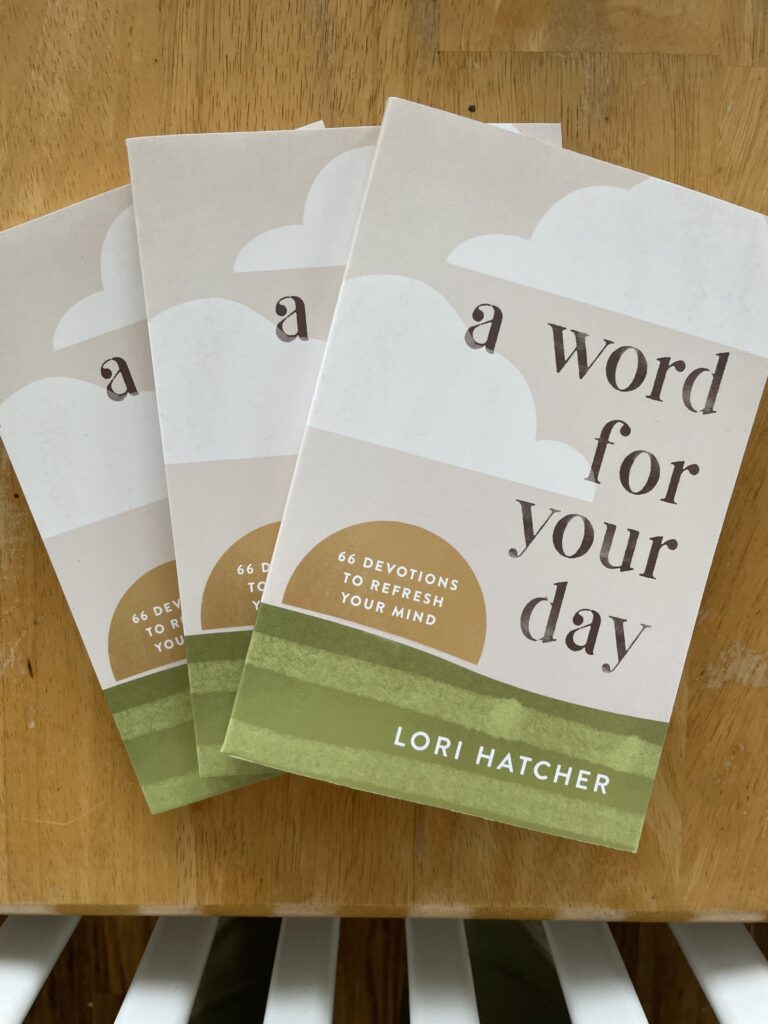
Allow God’s Word to change your life, one word at a time! This 66-day devotional highlights one relevant, sometimes unexpected, word from each book of the Bible. Lori Hatcher, the best-selling author of Refresh Your Faith and Refresh Your Prayers, shares simple—but never simplistic—truths. She continues to remind us that every part of Scripture is active, alive, and applicable. From beginning in Genesis to new in Revelation, ponder each significant word as you move through your day and allow God to transform your heart and mind.
Have you subscribed to Refresh?

Recent Comments